
Find Connecticut Arrest Records
Connecticut arrest records are public documents you can search online or by mail. The state has laws that make booking logs and jail rosters open to all citizens. You can find recent arrests through local police departments or the State Police Bureau of Identification. The Department of Emergency Services and Public Protection (DESPP) keeps statewide criminal history records. Many towns post daily arrest logs on their websites. You may also search court records through the Judicial Branch. This guide shows how to obtain arrest records in Connecticut.
Where to Find Connecticut Arrest Records
Local police departments maintain arrest records for their towns and cities. Each department keeps its own booking logs and incident reports. You can visit the police station in person during business hours. Many departments also post arrest logs online. These logs show names, charges, and arrest dates. Larger cities like Hartford, New Haven, and Bridgeport have online portals. The Department of Emergency Services and Public Protection oversees law enforcement statewide.
The State Police Bureau of Identification handles statewide criminal history requests. This office maintains records from all police agencies in Connecticut. You can request a full criminal history check for a fee. The process requires fingerprinting and form submission. Results show arrests, charges, and case outcomes from across the state. This is the most complete source for Connecticut arrest records.
Courts in Connecticut also hold arrest-related documents. The Judicial Branch Case Look-up system lets you search criminal cases online. You can look up cases by defendant name or docket number. This shows charges, court dates, and case status. The system covers all Superior Courts in Connecticut.
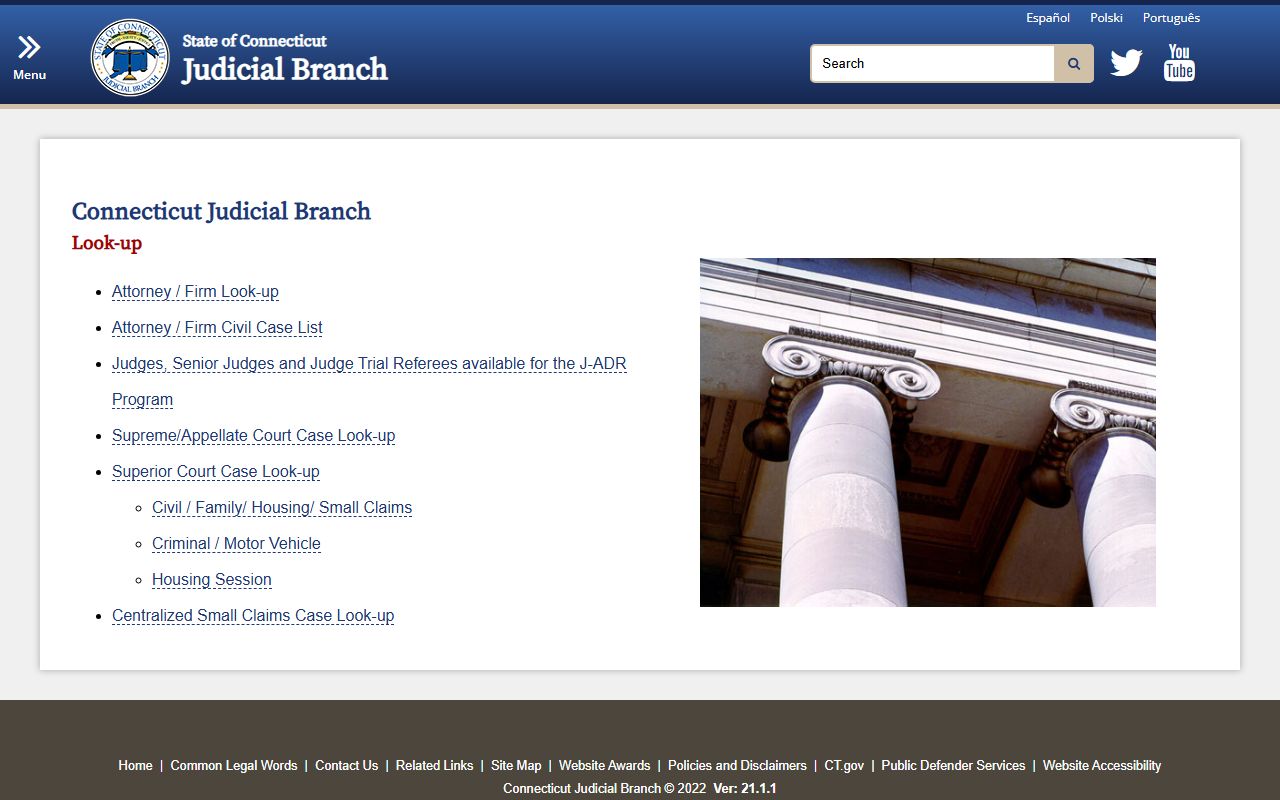
Search the Connecticut Judicial Branch Case Look-up system for criminal records.
Note: Court records show case outcomes but may not include the full arrest report details.
How to Search Arrest Records Online in Connecticut
The internet makes it easy to find arrest records in Connecticut. Several official websites offer free searches. You can use these tools from home at any time. Results are instant for many databases. This saves time compared to visiting offices in person.
The Connecticut Department of Correction Inmate Search shows current jail and prison inmates. Enter a name or DOC number to find someone. Results show the facility, charges, and sentence details. The database updates daily. This tool only shows inmates in state custody.
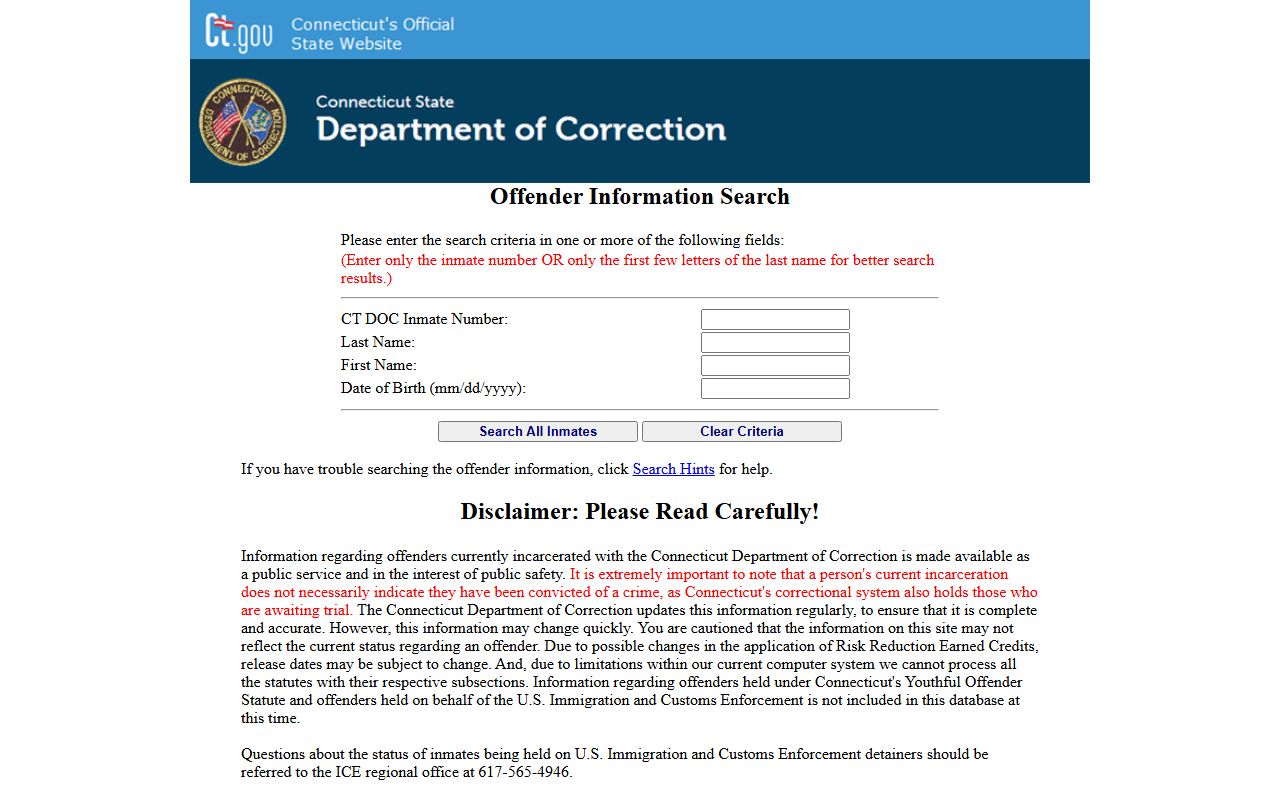
Access the Connecticut DOC Inmate Search portal for current inmate information.
Many police departments post daily arrest logs on their websites. These show recent bookings with names and charges. Hartford, New Haven, and Bridgeport all have online logs. Smaller towns may post weekly summaries. Check your local police department website first. Some use third-party services like CrimeReports or SpotCrime.
The Judicial Branch criminal case lookup shows court records. This includes arraignments, pleas, and verdicts. Criminal and motor vehicle cases are both searchable. You need the person's full name to search. Results show all cases in Connecticut courts.
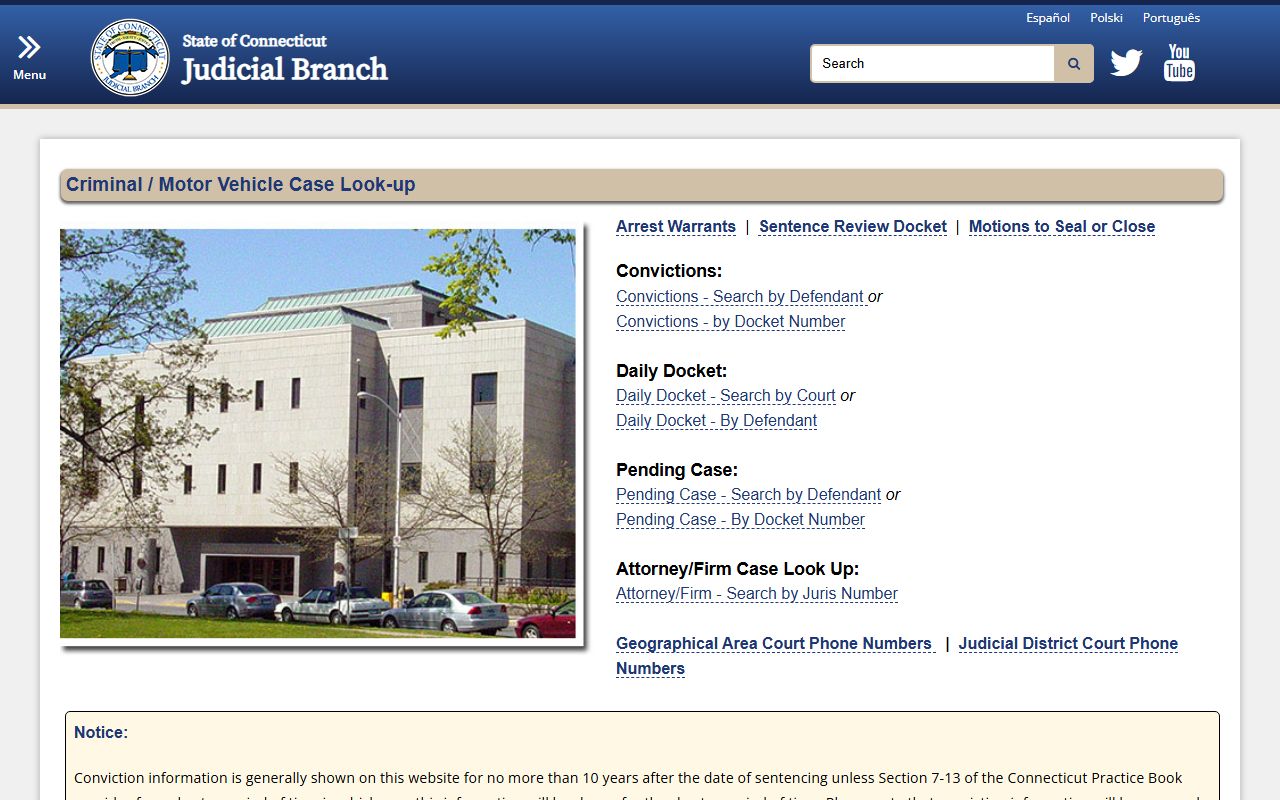
Search criminal and motor vehicle cases through the Connecticut Judicial Branch.
Connecticut State Police Resources for Arrest Records
The Connecticut State Police patrol state highways and towns without local police. They also provide specialized law enforcement services. Twelve troop posts cover the entire state. Each post keeps its own arrest records and incident reports. You can contact the post that handled an incident for records.
The State Police Bureau of Identification is at DESPP headquarters in Middletown. This office processes all criminal history record requests. They handle both state and federal background checks. Fingerprinting services are available by appointment. You must bring valid photo identification. The office accepts requests by mail only for most services.
Connecticut State Police troops cover different regions. Troop A serves Southbury and western Fairfield County. Troop B covers Canaan and the northwest corner. Troop C is in Tolland for the north-central area. Troop D serves Danielson and eastern Connecticut. Troop E covers Montville and the southeast. Troop F patrols Westbrook and the shoreline. Troop G is in Bridgeport. Troop H covers Hartford. Troop I serves Bethany and New Haven County. Troop K is in Colchester. Troop L covers Litchfield.
Submit record requests through the DESPP GovQA portal.
State police accident reports are available through a separate system. Accident Information Summaries provide preliminary crash details. These include parties, vehicles, and brief incident descriptions. Reports stay online for thirty days. You can also request full reports through the GovQA portal.
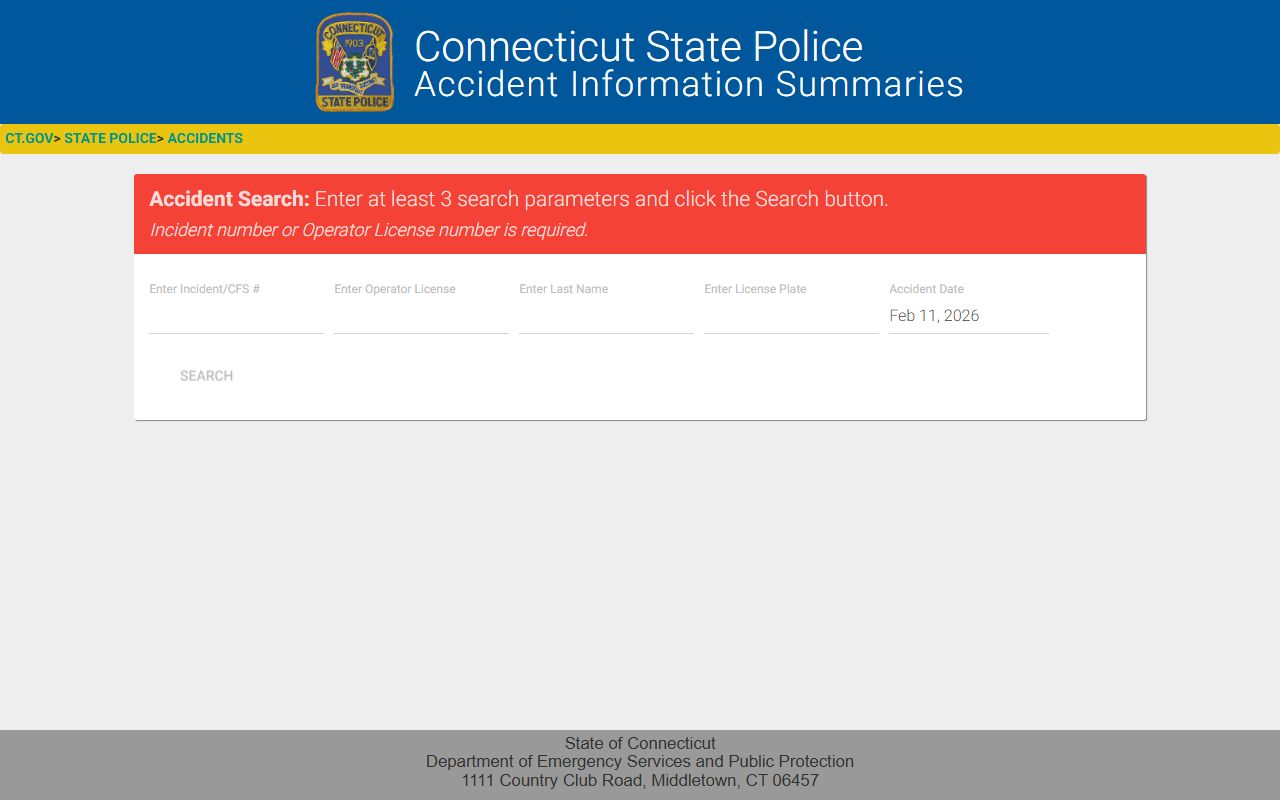
View accident information summaries through the Connecticut DESPP system.
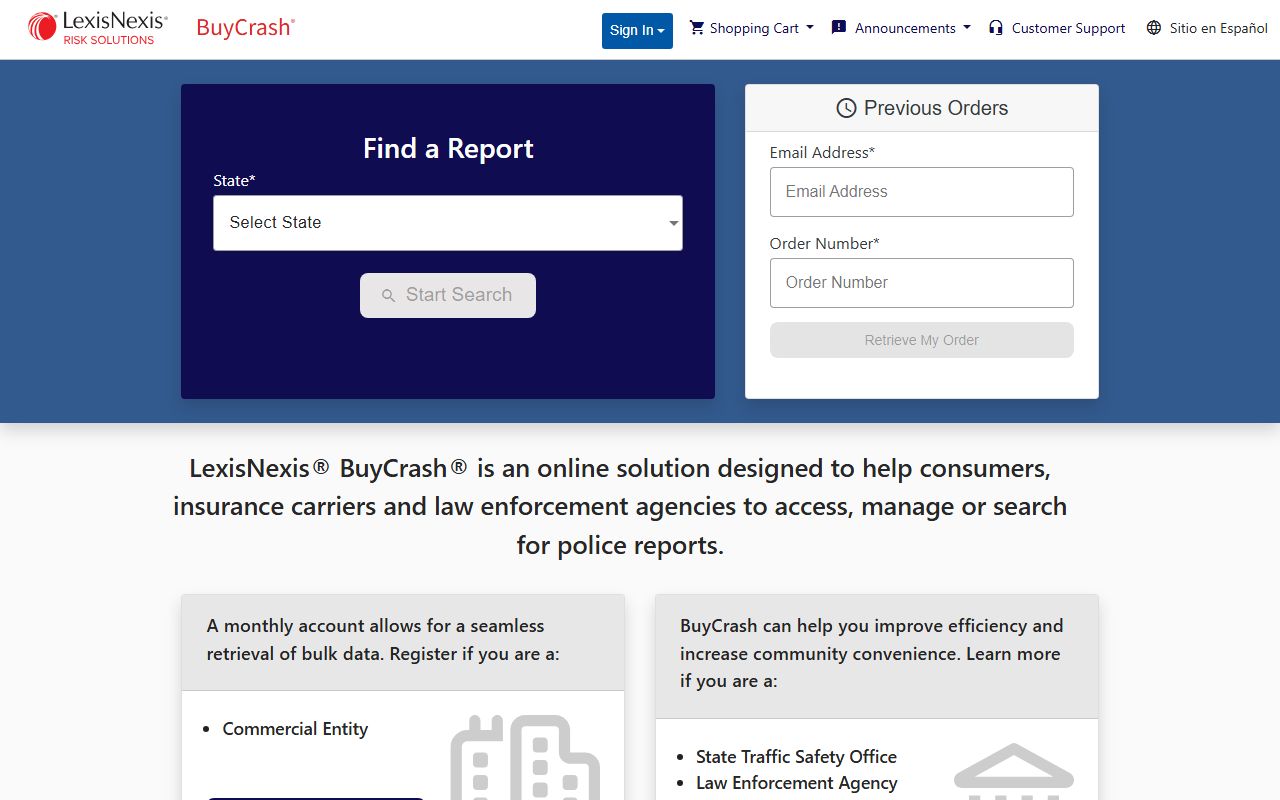
Some accident reports are available at BuyCrash.com. This service provides motor vehicle accident reports online. Most simple accidents appear within thirty business days. Fees apply for report copies.
Connecticut Local Police Departments and Arrest Logs
Each city and town in Connecticut has its own police department or state police coverage. These departments create and keep arrest records for their areas. You can request records from the department that made the arrest. Most departments have a records division to handle requests. Hours and procedures vary by location.
Major cities have full-time records staff. Bridgeport Police maintain records at 300 Congress Street. Their division handles incident and accident reports. New Haven offers online reports through their Police to Citizen portal. Hartford processes about sixty-five thousand reports each year. They no longer accept email requests for records.
Smaller towns may share records services with neighboring communities. Some use resident state troopers for police coverage. These towns still keep arrest records at the state police post. Call ahead to learn the process in your town. Staff can explain fees and wait times.
Police departments charge fees for report copies. Most follow the state Freedom of Information Act guidelines. Municipal agencies may charge up to fifty cents per page. Some offer free online logs for recent arrests. Certified reports cost more than standard copies. Ask about fees when you submit your request.
Understanding Connecticut Arrest Record Laws
Connecticut law makes arrest records public under C.G.S. § 1-215. This statute defines what counts as a record of arrest. It includes the name, race, and address of the person arrested. The date, time, and place of arrest are also public. The offense charged must be disclosed. These records are open from the moment of arrest.
Law enforcement cannot redact most arrest record information. They must release the basic facts of any arrest. Some exceptions protect sensitive details. Witness identities remain confidential. Names and addresses of sexual assault victims are private. Information that could hurt a pending case may be withheld. Courts can order records sealed in special cases.
The Connecticut Freedom of Information Act (FOIA) governs public records access. C.G.S. § 1-200 et seq. establishes your right to view government documents. Agencies must respond to requests within four business days. They can charge fees for copies and staff time. You can appeal denials to the Freedom of Information Commission.
Clean Slate laws affect some arrest records in Connecticut. Under C.G.S. § 54-142a, certain records are automatically erased. Dismissed charges and not guilty findings qualify. Some misdemeaners erase after seven years. Class D and E felonies may erase after ten years. Erased records no longer appear in public searches.
Fees for Connecticut Arrest Records
Costs vary based on the type of record and where you request it. State agencies and local departments set their own fees. Some records are free online. Others require payment for copies or searches. Know the costs before you submit a request.
The State Police Bureau of Identification charges set fees for criminal history checks. A state criminal history check costs seventy-five dollars. Fingerprinting services cost fifteen dollars. Federal criminal history checks cost thirteen dollars and twenty-five cents. These fees apply whether or not records are found. Payment must be exact and separate for each service.
State police reports require a search fee under C.G.S. § 29-10b. The non-refundable fee is sixteen dollars. This applies even if no report exists. Payment must arrive before any search begins. The GovQA portal handles these requests online.
Local police departments follow FOIA copy fee limits. State agencies charge up to twenty-five cents per page. Municipal agencies may charge up to fifty cents per page. Some departments charge additional fees for certification. Others have flat rates for specific reports. Call ahead to confirm current fees.
Note: Fees can change, so verify current costs with the agency before submitting your payment.
How to Request Connecticut Arrest Records by Mail
Mail requests work well when you cannot visit in person. Many agencies accept written requests for arrest records. You must include specific information for staff to find the record. Processing takes longer than online or in-person requests. Plan for extra time when using mail.
For state criminal history checks, mail your request to the State Police Bureau of Identification. The address is 1111 Country Club Road, Middletown, CT 06457. Include completed form DPS-0846-C. Attach a check or money order for the exact fee. Do not send cash through the mail. Allow five to ten business days for processing.
Local police departments also accept mail requests. Include the case number if you know it. Provide the date, time, and location of the incident. List the names of parties involved. Include your contact information and mailing address. Add payment for any fees. Use a self-addressed stamped envelope for return mailing.
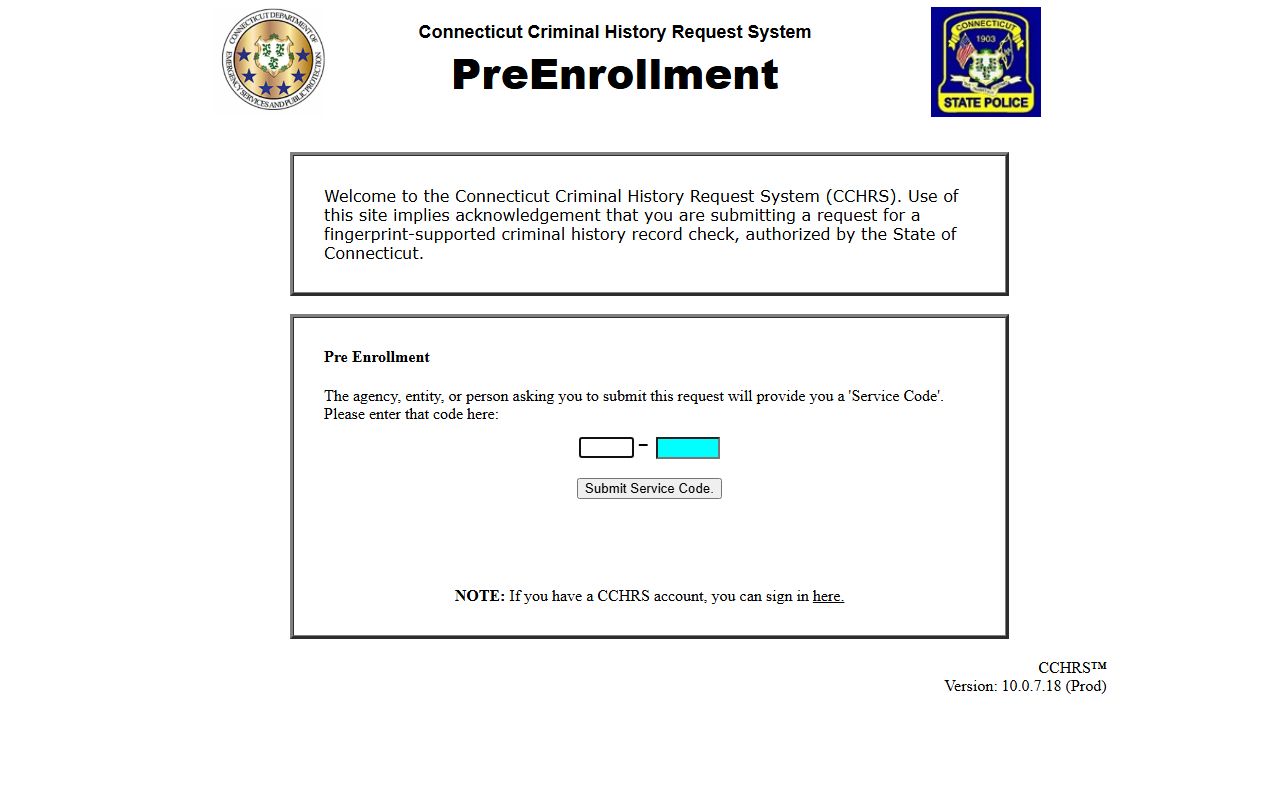
Pre-enroll for fingerprinting services through the Connecticut Idemia system.
FOIA requests by mail should be clear and specific. Describe the records you want in detail. Include your name and return address. State that you are requesting records under the Connecticut Freedom of Information Act. Agencies must respond within four business days of receipt. They may extend this time for complex requests.
Browse Connecticut Arrest Records by County
Connecticut has eight counties with local police and court systems. Each county has resources for finding arrest records. Click a county below to learn more about records in that area.